
Dubai Office Interior Design: Workplace Trends for 2026
Rarely in its history has the Dubai workplace been reshaped as fast as it is now. As the emirate locks in its global business-hub status, employers from Business Bay to Dubai Internet City are rethinking what an office is actually for. Hybrid working, fierce competition for talent, and ambitious sustainability targets are redrawing every floor plate. In 2026 the office is less a place to sit at an assigned desk and more a destination designed to bring people together. At the very heart of this shift sits interior design, quietly translating corporate strategy into physical space. Below, this report surveys the trends defining Dubai office design this year, with practical detail for anyone planning a fit-out. Realistic 2026 market figures are provided throughout to ground the vision firmly in reality.
Trend One — Designing Hybrid-First
The biggest shift of all is that offices are no longer built around one fixed desk per person. With hybrid schedules now normal across Dubai, many organisations plan for roughly 70 to 80% as many desks as employees. The space freed up is poured into collaboration zones, meeting rooms, and social areas that actively draw people in. Bookable desks, focus pods, and activity-based settings let staff choose the right spot for each task https://www.interior-designers.ae/services/apartment-interior-designs/ of the day. Given prime Dubai office rents, this approach can noticeably cut leased area, an appealing prospect. Designing for a mobile population, though, demands excellent acoustics, clear wayfinding, and reliable booking technology. Done well, a hybrid-first layout reads as generous and energising rather than merely efficient.
Trend Two — Wellness and Biophilic Workplaces
Once a nice perk, employee wellbeing has moved firmly into the core design brief. Biophilic design, which reconnects people with nature, is one of the strongest currents running through 2026 Dubai interiors. Recent fit-outs are full of living walls, generous planting, natural timber, and abundant daylight. Access to greenery and views is repeatedly connected to lower stress and sharper focus, which employers increasingly take seriously. Rounding out the wellness toolkit are air quality, ergonomic furniture, and circadian lighting that mimics the natural day. On genuinely intense working days, quiet rooms and dedicated wellness spaces give staff somewhere to reset. In a city of glass towers, bringing nature indoors has become a real competitive advantage.
- Living walls and grouped planting across work and break areas
- Circadian lighting that adjusts warmth to the time of day
- Quiet rooms, prayer rooms and dedicated wellness spaces
- Ergonomic, height-adjustable furniture set as the default
Trend Three: Sustainable, Net-Zero Fit-Outs
For serious employers in Dubai, sustainability is no longer optional. Both the UAE’s Net Zero 2050 commitment and Dubai Municipality’s evolving 2026 fit-out guidelines are steering greener choices right across the board. As standard practice, designers now specify low-emission materials, recycled and rapidly renewable finishes, and energy-efficient lighting and cooling. Increasingly, certification frameworks such as LEED and WELL are written into project briefs from the very outset. By reusing existing partitions, furniture, and services cuts both project cost and embodied carbon at once. Efficient mechanical and cooling design matters enormously in a climate where air conditioning dominates energy use. Beyond mere compliance, a demonstrably sustainable office has become a powerful signal to clients and recruits alike.
Trend Four — Smart Offices and Integrated Technology
Technology is now threaded invisibly into the very fabric of the workplace. A single intelligent platform now ties together lighting, cooling, and occupancy sensing. Room-booking screens, app-based desk reservation, and seamless video conferencing are expected rather than exceptional in 2026. Armed with occupancy data, facilities teams can track how space is really used and adjust it over time. Touchless entry, automated blinds, and voice or app control add both convenience and welcome hygiene. The best designs deliberately hide this complexity, so the technology serves people without dominating the aesthetic. For Dubai’s forward-looking firms, a genuinely smart office is fast becoming the baseline expectation.
Trend Five: Quiet Luxury Reaches the Workplace
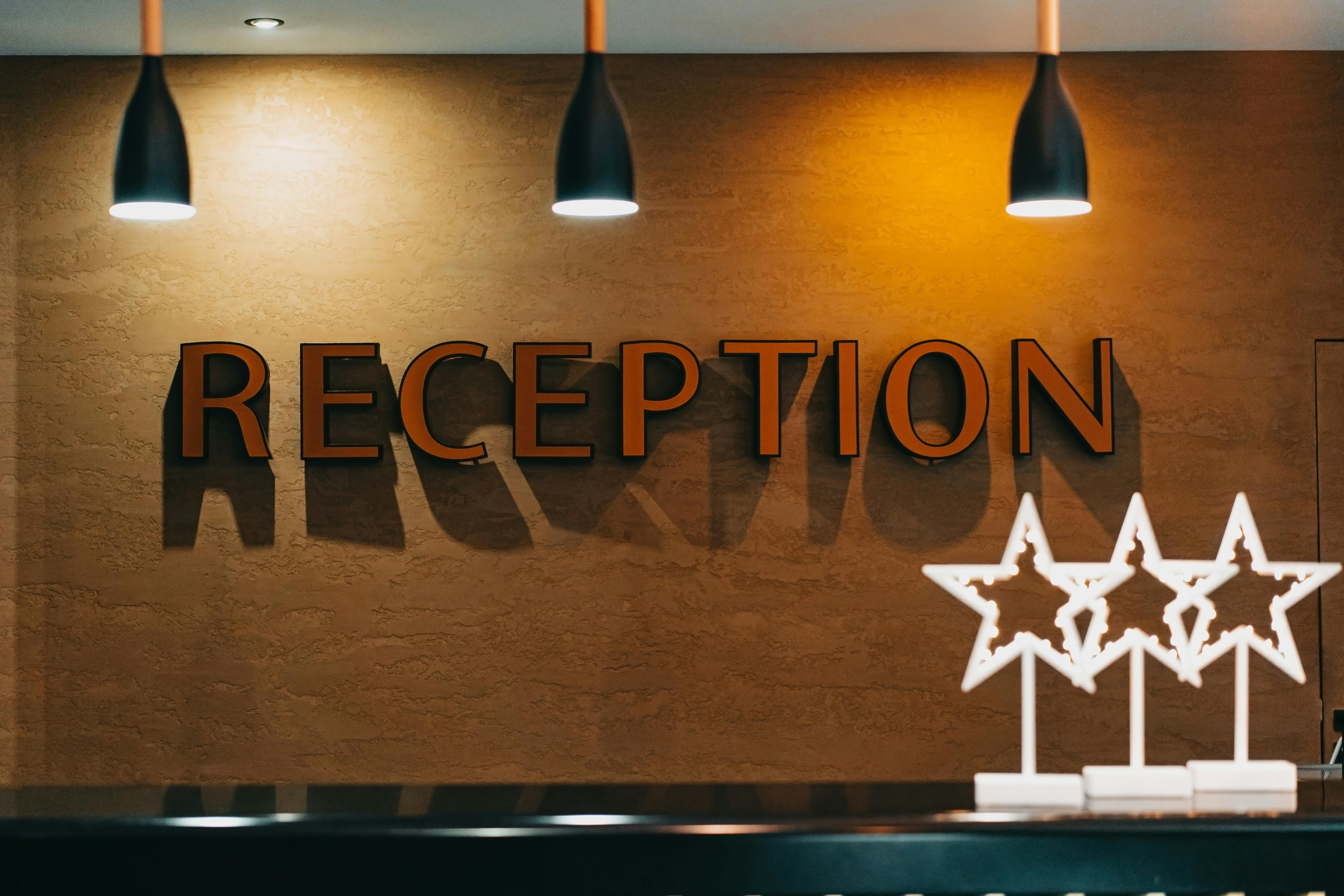
The exuberant, logo-heavy office is quietly giving way to a more understated confidence. Quiet luxury, already dominant in Dubai homes, has now arrived firmly in the workplace. Imagine warm minimalism, natural stone, rich timber, tactile textiles, and a restrained palette rather than bold corporate colour. Reception areas and boardrooms increasingly echo the lobby of a fine hotel, conveying calm assurance to every visitor. High-quality materials that age gracefully are chosen over trend-driven finishes that quickly date and tire. This mood fits well with wellness and sustainability, since natural materials serve all three goals at once. The end result is an office that feels expensive precisely because it is not shouting for attention.
Trend Six: Flexible, Multi-Use Spaces
For the modern Dubai office, flexibility has become the number-one requirement. Movable partitions, modular furniture, and reconfigurable rooms let a single space host a workshop, a town hall, or quiet focus work on demand. Cafeteria areas double as informal meeting spots and evening event venues, paying back their footprint many times over. Design for change future-proofs a fit-out against shifting headcounts and evolving working patterns. This adaptability is especially valuable to the many fast-growing startups and scale-ups across Dubai. Furniture on castors, demountable walls, and generous power and data provision all support easy reconfiguration. Where an office can adapt without a full renovation, it protects the original investment for years.
2026 Office Fit-Out Costs at a Glance
Getting a handle on budgets helps turn these trends into a real, deliverable project. As a 2026 market estimate, office and corporate fit-outs in Dubai commonly range from around AED 220 to 650 per square foot, with most mid-range projects landing between AED 280 and 550. Design-only fees typically come in around AED 175 to 550 per square foot, or roughly 10 to 20% of the overall budget. Smaller fit-outs frequently finish in about four to eight weeks, while larger headquarters can take three to six months. Regulatory sign-offs, including a no-objection certificate and a fit-out permit, usually add several days to a few weeks depending on the authority. Below, the table captures typical benchmarks purely for early planning purposes.
| Project Level | Est. 2026 Cost per Sq Ft | Typical Duration | Best For |
|---|---|---|---|
| Entry-level and budget | AED 220 to 300 | 4 to 8 weeks | Startups and simple refits |
| Mid-range | AED 280 to 550 | 8 to 16 weeks | Growing corporate teams |
| Premium and HQ-level | AED 550 to 650+ | 3 to 6 months | Flagship and brand spaces |
Planning Your Fit-Out: Where to Start
Making these trends into a smooth project comes down largely to sequence and early decisions. The best results come from fixing your priorities before a single wall is drawn. A short, sequenced checklist keeps the many moving parts aligned. Fixing budget, sustainability targets, and desk ratios up front averts expensive changes later on. Involving the design team before you sign a lease can even sway which floor plate you choose. The steps below offer a sensible starting order for most Dubai office projects.
- Work out how your teams actually operate and settle a realistic desk ratio
- Decide a budget band along with any sustainability or certification goals
- Establish the authority, no-objection certificate, and permit route
- Give the designer a brief on brand, wellness, and technology priorities
- Break the fit-out into phases so key teams can keep working throughout
The Takeaway for Dubai Businesses
Taken together, these six trends add up to a clear direction for the Dubai workplace. The office of 2026 is flexible, sustainable, technology-enabled, and unmistakably focused on the people who use it every day. For employers, a thoughtful fit-out is now a strategic tool for winning talent and expressing brand values. The strongest results come from lining up design decisions with how teams genuinely work rather than chasing trends for their own sake. Getting ahead on budget, approvals, and sustainability targets keeps projects smooth and predictable. Whether refreshing a single floor in Downtown Dubai or building a new headquarters in Business Bay, the principles remain the same. Invest in space that backs your people, and the workplace will repay you many times over.